A hoodie isn’t one product to a decorator. Printed full colour, it is a DTG job; on a poly blend it is DTF; with a stitched logo it is embroidery, at a different price, with different limits on what fits where.
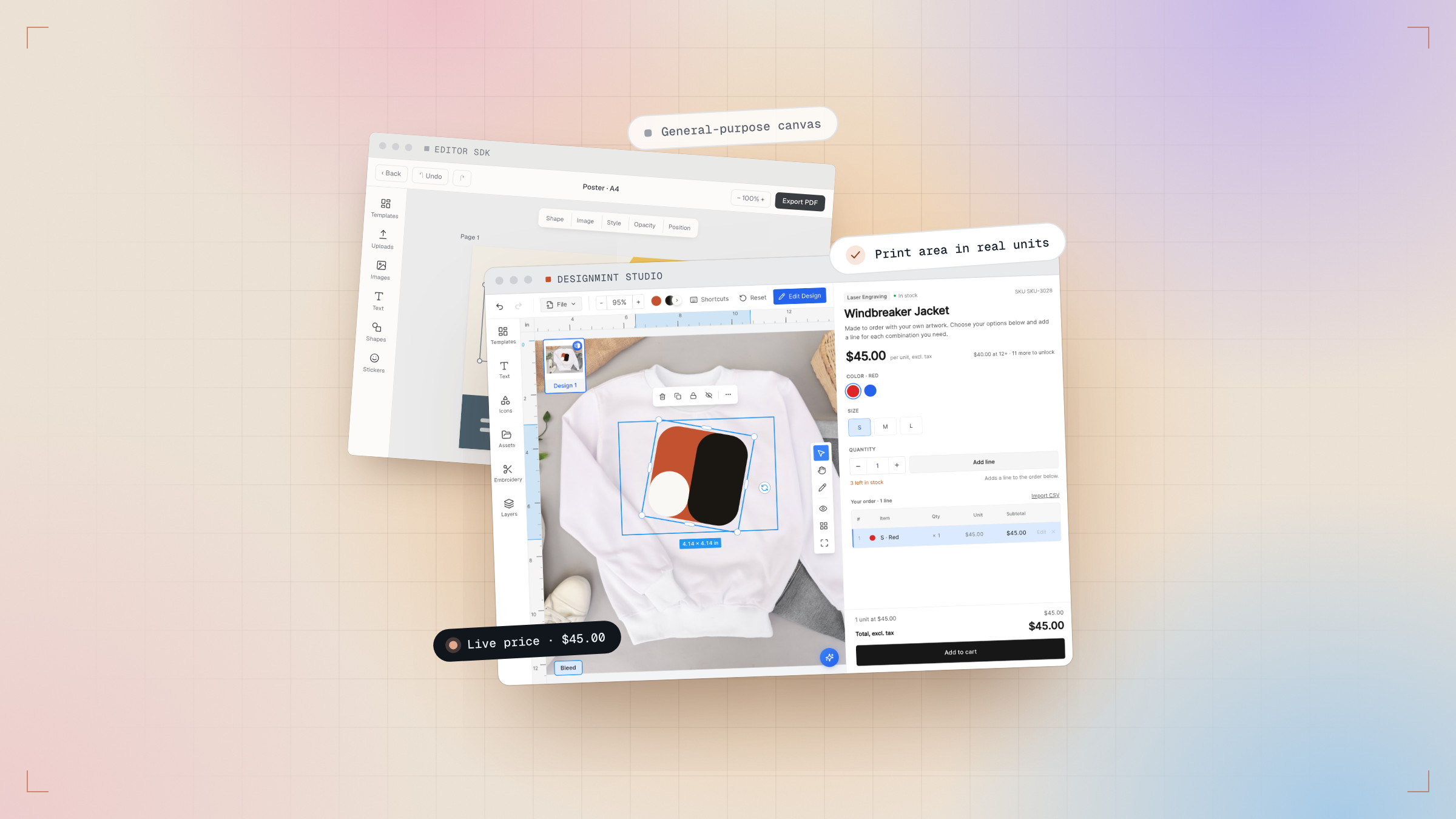
Most storefronts can only sell it one way. DesignMint Commerce prices each technique per product, so the customer picks how it’s made and sees the right price as they design.
What each technique hands to the press
- DTG — full-colour prints on cotton: tees, hoodies, totes. A 300 DPI PNG.
- DTF — transfers for mixed fabrics and low minimums: poly blends, caps. A 300 DPI PNG.
- Embroidery — a stitched, premium finish on caps, polos and jackets. DST, EXP or PES.
- Laser engraving — clean vector marks on metal, wood, leather and glass. SVG paths.
- Anything else — UV, screen or vinyl, declared in Backoffice with your own rules and pricing.
Priced by the rules you set
Each technique carries its own price on each product, and the price assembles on the server: blank cost, your markup and the decoration charge per print location. The quote on the product page and the charge at checkout come from the same rule, so they can’t disagree.
Valid print areas follow the technique too — an embroidery-only cap never offers DTG.
Filed under CommerceAll posts